
There is something odd about the persistence of communal bathing. The practical reason for it disappeared roughly a century ago, when houses got their own hot water. The bathhouse should have died with the outdoor toilet. Instead it keeps being reinvented.
A practice older than plumbing
Public bathing shows up independently across the ancient world, wherever there was enough water and enough fuel. The Romans built it at extraordinary scale — the great imperial baths were less bathrooms than civic centres, with libraries, gardens, exercise grounds and space for thousands of people. The sequence they used, from warm room to hot room to cold plunge, is recognisably the same sequence people follow in a modern bathhouse. We have not improved much on the format in two thousand years.
What the Romans understood, and what got lost in the era of the private bathroom, is that bathing was never purely about being clean. It was somewhere to be, with other people, doing very little.
The traditions, briefly
Each of these developed separately, and each solves the same problem slightly differently.
Finnish sauna
Dry heat at high temperature, water thrown on hot stones to raise humidity in bursts, cold immersion or snow afterwards. Sauna in Finland is not a wellness activity — it's domestic infrastructure. There are saunas in apartment blocks, workplaces and parliament. The cultural norm of using one several times a week is what made Finland the place where most of the research on sauna bathing has been done.
Turkish hammam
Wet heat, marble, and a structured sequence: warming through, then a vigorous exfoliating scrub and soap massage delivered by an attendant, then cooling and resting. The hammam is the most choreographed of the traditions — something is done to you, in a set order, by someone who does it all day.
Japanese sento and onsen
Soaking rather than sweating. You wash thoroughly and completely before entering the water, seated at a low tap, because the bath is for soaking in and never for cleaning in. Onsen use natural hot spring water; sento are neighbourhood bathhouses. The etiquette is precise and taken seriously, and the emphasis on washing first has quietly influenced bathhouse rules everywhere.
Russian banya
The most vigorous version. High heat with steam, and the venik — a bundle of leafy birch or oak branches used to beat and brush the skin, which sounds alarming and is apparently wonderful. Then cold water, hard and immediately.
Korean jjimjilbang
The most expansive interpretation: multiple heat rooms at different temperatures and made of different materials, cold pools, sleeping halls, food, and an assumption that you might stay for many hours or overnight. Jjimjilbang treat bathing as the anchor of a whole day rather than an hour.
What they all share
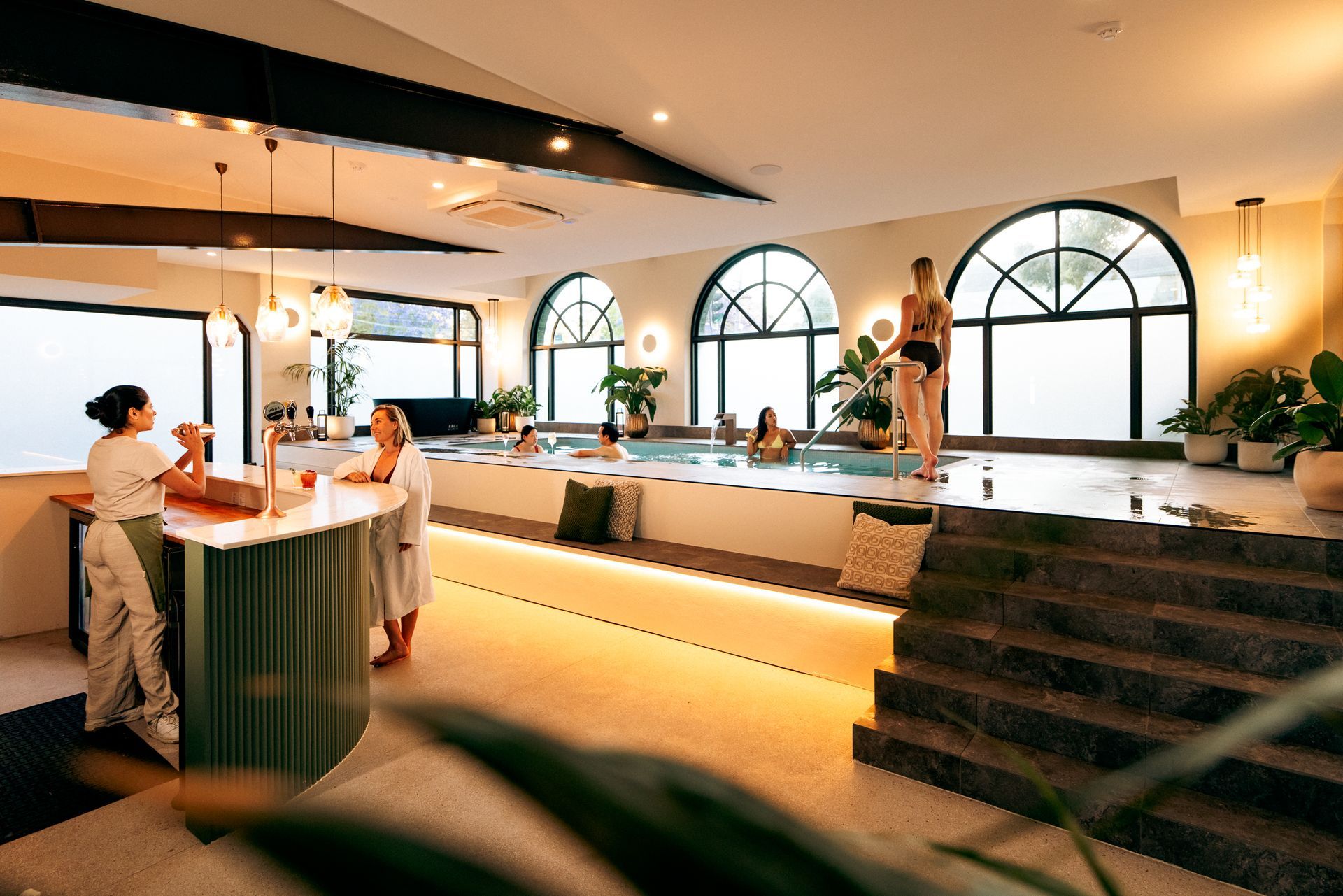
Strip away the marble, the birch branches and the specific temperatures and the same three elements are underneath every version.
Contrast
Hot then cold, repeated. Not one temperature held for a long time, but movement between extremes. Every tradition arrived at this independently.
Time
Bathing takes hours, not minutes, and the resting is not an interruption of the bathing — it is the bathing. Cultures that treat it as a quick wash don't build bathhouses.
Company
Almost always communal, and almost always somewhere ordinary social rules relax slightly. Fewer clothes, less hierarchy, less to do.
The modern urban bathhouse
What's appeared in cities over the last decade is a hybrid: Finnish heat, Japanese soaking discipline, Roman sequencing, and a very contemporary reason for going. People are not turning up because they lack a shower at home. They are turning up because it is one of the few places left where being unreachable for ninety minutes is the entire proposition.
That's a real shift in what a bathhouse is for. The old bathhouse was social infrastructure in a world short on private space. The new one is a refuge from a world with too little unstructured, unproductive, un-notified time in it. Same rooms, opposite problem.
Building a practice rather than having a treat
The people who get the most out of bathhouses are the ones who stop treating it as an occasion. A birthday visit is lovely and largely forgettable. A fortnightly habit changes something, in the same undramatic way that walking regularly does.
A few things that seem to distinguish a practice from a treat:
- Same slot, low stakes. A recurring time you don't have to decide about each week.
- Long enough to stop clock-watching. Ninety minutes minimum. An hour becomes admin.
- Alone at least sometimes. Solo visits are a different experience from social ones, and the quiet one is the one people end up protecting.
- No phone. Non-negotiable, and the hardest part for most people.
- Don't optimise it. The moment you start tracking rounds and durations you've turned it into training. Some people want that. Most people came here to escape exactly that.
Bathhouses in Sydney
Sydney came to this later than Melbourne and much later than Seoul or Helsinki, but the city now has a genuine bathhouse culture rather than a handful of hotel spas. The pattern here mirrors the international one: heat, cold, soak, rest, in a space designed to slow you down, priced as a regular habit rather than a luxury.
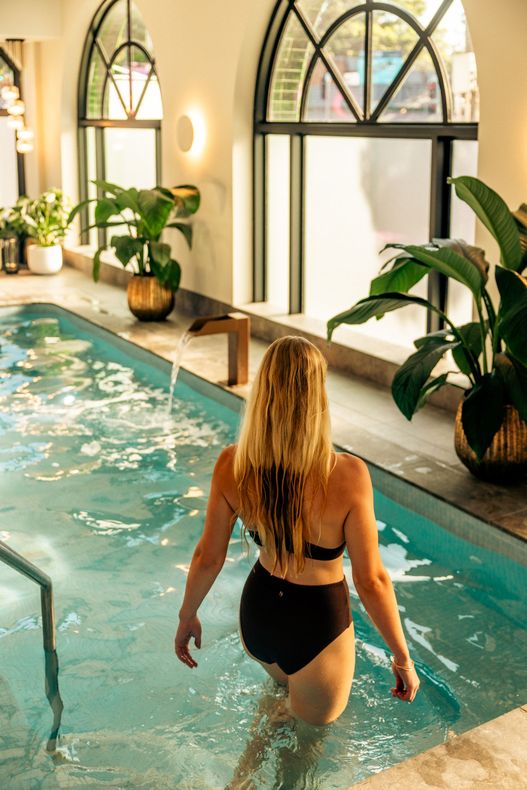
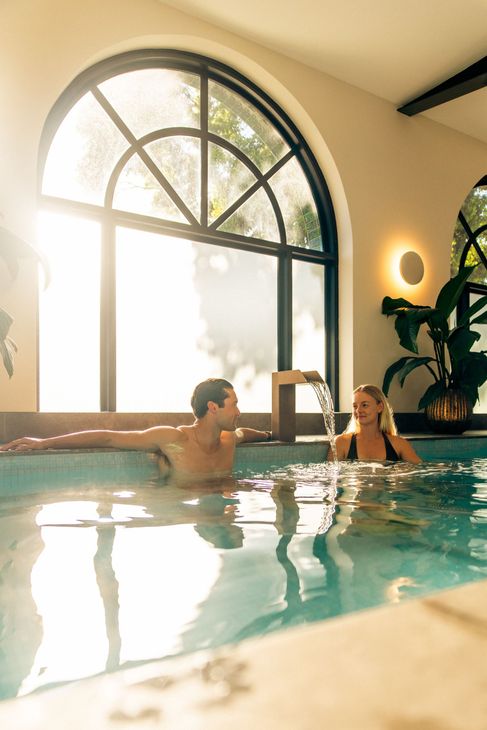
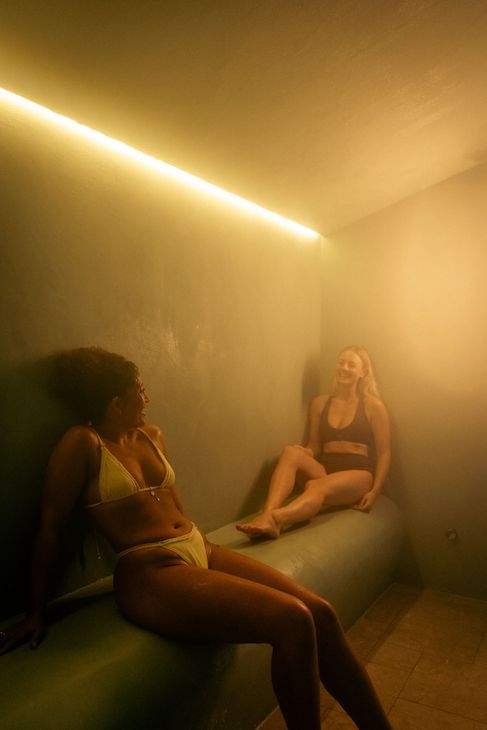
Ours is in Chatswood, on the Pacific Highway, eight minutes' walk from the station. Traditional sauna, steam room, cold plunge pools and a warm magnesium mineral pool, plus quiet rest areas and a bar that doesn't serve alcohol. Sessions run 60, 90 or 120 minutes.
Questions people actually ask
What is a bathhouse, exactly?
A bathhouse is a venue built around bathing as an activity rather than as hygiene — typically some combination of hot rooms (sauna, steam), cold water (plunge pools, cold showers), warm water for soaking, and quiet space to rest between them. The defining feature is that you move between temperatures over an hour or two, rather than washing and leaving.
How is a bathhouse different from a day spa?
A day spa is organised around treatments delivered to you — massage, facials, body work — usually on an appointment for a specific service. A bathhouse is organised around a space you use yourself, at your own pace, for a block of time. Many bathhouses also offer massage, but the facility is the main event rather than an add-on to a treatment.
Is a bathhouse the same as a sauna?
A sauna is one room. A bathhouse is the whole sequence — the sauna plus the cold, the soak and the rest. You can have a sauna without a bathhouse, but the contrast between temperatures is what makes bathhouse bathing its own thing.
Why do so many cultures have a version of this?
Hot water is pleasant, heat is sociable, and until very recently most people didn't have a private bathroom. Public bathing solved a practical problem and turned into a social institution almost everywhere it appeared — Rome, Istanbul, Kyoto, Seoul, Helsinki, Budapest. The practical need has gone; the institution mostly hasn't.
Do I bathe naked in an Australian bathhouse?
No — swimwear is standard in Australian bathhouses, including ours. Nude bathing is the convention in Finnish and German sauna culture and in Japanese onsen, but that hasn't carried across here. If you've read about European sauna etiquette, don't apply it locally.
How often do people go?
It varies enormously. Some people come weekly and treat it as maintenance in the way others treat a gym session; others come once a month, or when they've had a hard week. In sauna cultures, several times a week is unremarkable. There's no correct frequency.
Is it a social thing or a solitary thing?
Both, and often in the same visit. Historically bathhouses were among the most social spaces in a city — places to talk, argue and do business. Modern urban bathhouses tend to be quieter, and many people come specifically for time alone. Coming with one other person and lapsing into silence together is perhaps the most common version.
A bathhouse in Chatswood
Escape Bathhouse is a modern take on a very old idea — heat, cold, warm water and somewhere quiet to sit, eight minutes from Chatswood station. Sessions run 60, 90 or 120 minutes, Tuesday to Sunday.
989 Pacific Highway
Chatswood NSW 2067
60, 90 and 120 minutes
from $39
Tue–Sun from 7am
(Sun 8am). Closed Mon.